Welcome to Sylver Academy 2026–2027
Welcome to Sylver Academy! 👋
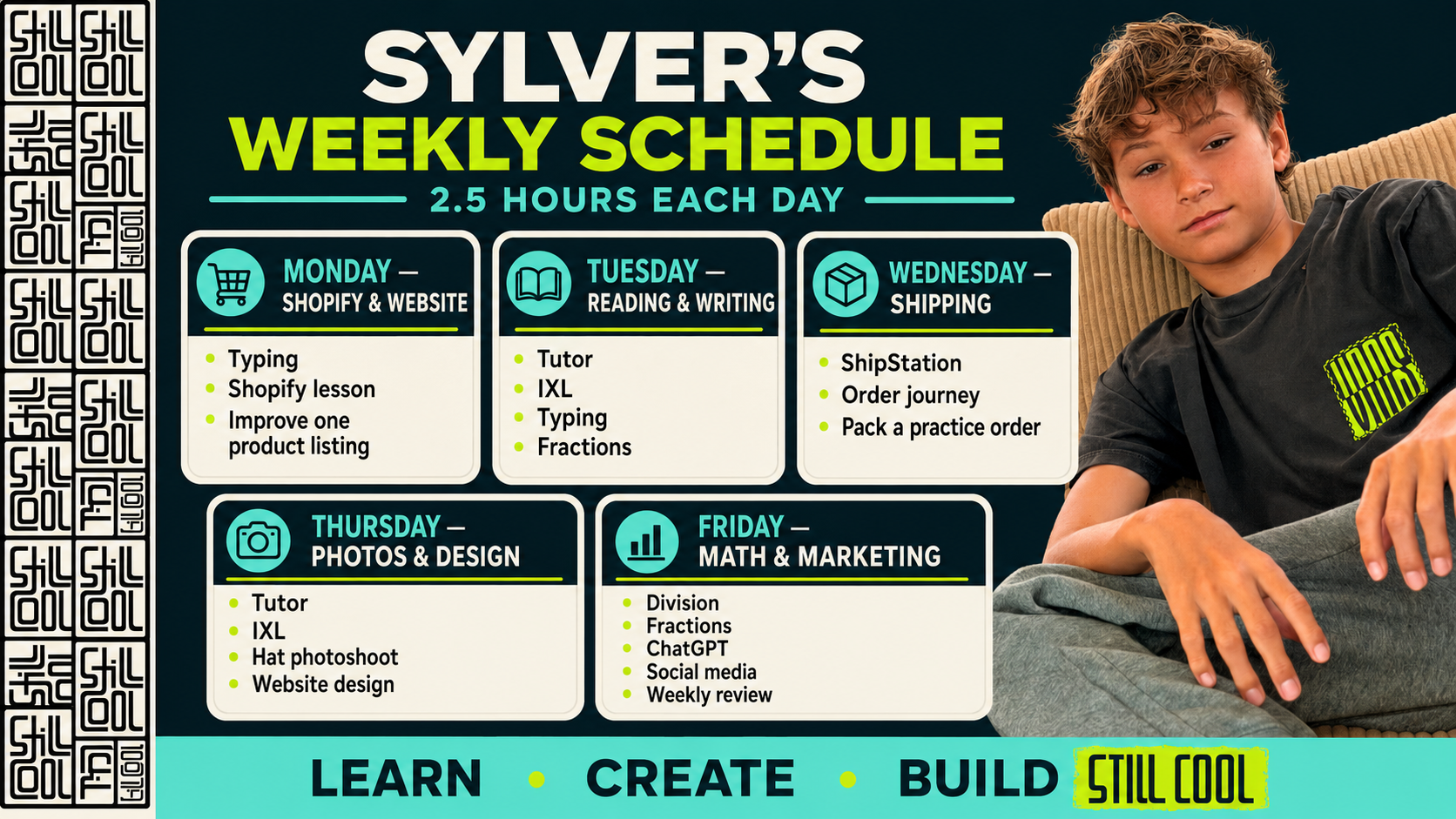
This year, your learning will be more creative, practical, and hands-on. You will develop important school skills while learning how to operate and grow your own Still Cool business.
Your Five Learning Priorities
Still Cool Online Business – 40%
Learn Shopify, manage products, improve the website, process orders, and ship packages using ShipStation.ChatGPT and Typing – 20%
Improve your typing skills and use ChatGPT responsibly for ideas, product descriptions, research, and problem-solving.Reading and Writing – 15%
Strengthen your reading comprehension and writing through IXL, tutor sessions, and real business assignments.Math – 15%
Practice division and fractions and learn how math is used in pricing, inventory, sales, and shipping.Social Media Marketing – 10%
Learn how to photograph hats, write captions, create content, and promote Still Cool online.

MONDAY (SHOPIFY STORE DESIGN & CUSTOMER EXPERIENCE)
Today’s Goal: Learn how an effective Shopify homepage guides customers, builds trust, and makes shopping easier. Sylver will examine a real online store and design a homepage plan for his future business.
Safety Reminder: Use only the Shopify Help Center or a supervised store. Do not publish, purchase, or change store settings.